
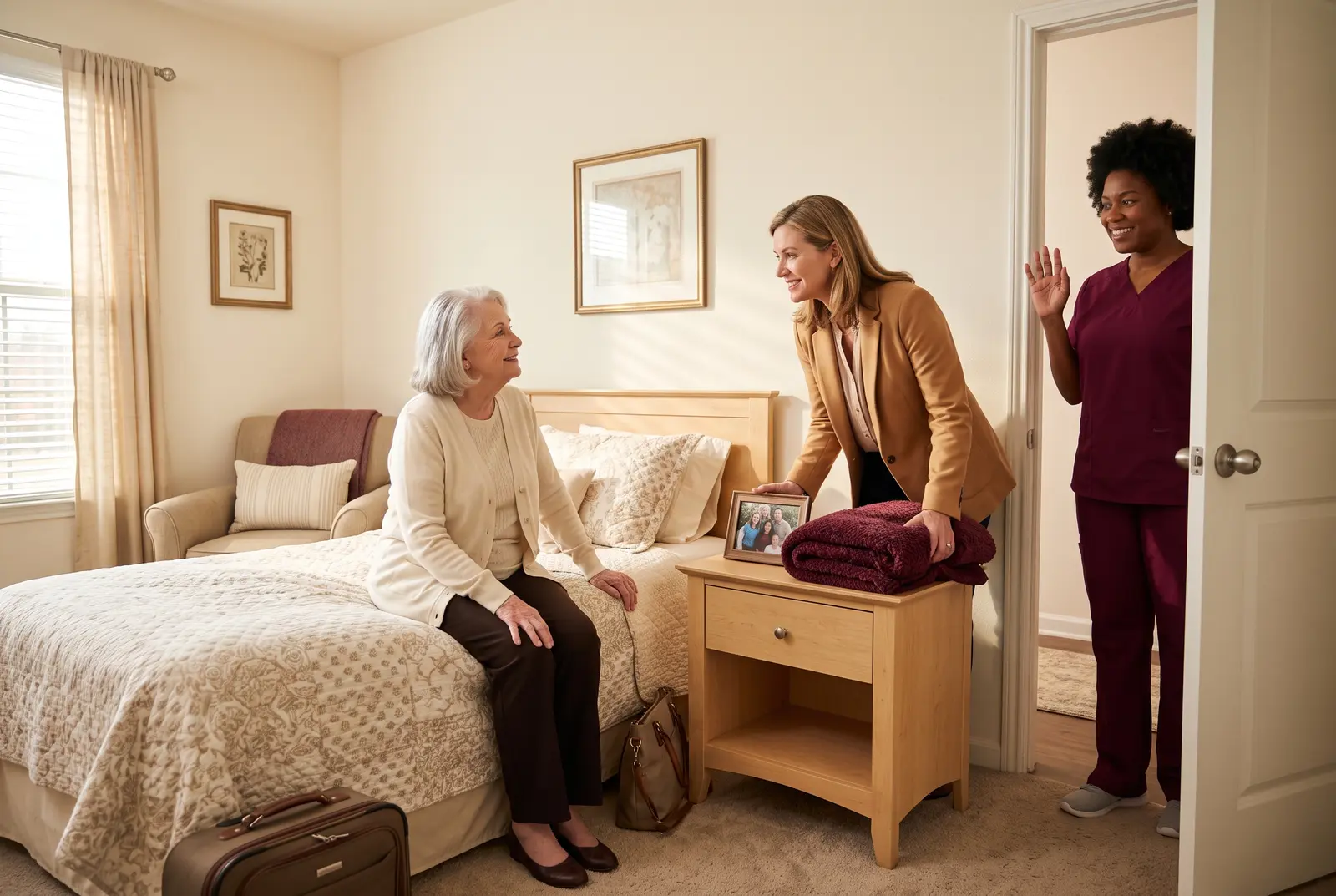
What Is Respite Care?
Respite care is a temporary stay in an assisted living community, memory care setting or residential care home. Your loved one receives the same daily support as other residents, including meals, help with personal care, medication support and activities, for a short period. Then they return home.
For many families in Plano and Collin County, respite care is what keeps home caregiving sustainable. It is not a sign of giving up. It is a way to keep going.
When Families Use Respite Care
- Caregiver vacations or travel. Weddings, family visits, work trips.
- Caregiver surgery or illness. When the person who provides care needs care themselves.
- Recovery support. Extra help after an illness when home isn’t quite ready.
- Home repairs or a move. When the house is temporarily unsafe or in transition.
- A trial stay. To experience care home life before considering a permanent move.
- Burnout. When caregiving has started to affect everyone’s health and relationships.

Signs of Caregiver Burnout
Family caregivers often don’t notice how tired they are until something gives. Watch for:
- Constant exhaustion, even after sleep
- Feeling irritable, resentful or hopeless
- Withdrawing from friends and activities you used to enjoy
- Getting sick more often or neglecting your own health
- Feeling that you can’t take a single day off
If this sounds familiar, a short respite stay may help. If you are struggling with your own health, please talk with your doctor too.
What to Confirm Before Booking a Respite Stay
Availability, admission requirements, minimum stays and costs vary from home to home. We help you confirm the details up front:
- Does the home have a room available for your dates?
- Is there a minimum length of stay?
- What is the daily or weekly rate, and what is included?
- What paperwork is needed: physician orders, medication list, TB test, assessment?
- Can staff meet your loved one’s needs for the entire stay?
- Is the room furnished, and what should you pack?
- Can the stay be extended or converted to a permanent move?
Respite Care and Memory Loss
A change in surroundings can be unsettling for someone living with dementia. If your loved one has memory loss, we help you look for homes that offer memory support and suggest ways to make the transition easier: familiar photos, a favorite blanket, a short visit beforehand and a clear routine.
A Gentle Introduction to Care Home Life
For some seniors, a short stay is the easiest way to discover that a care home can be a comfortable, social place. They meet caregivers, join in activities and enjoy meals with others. If a longer-term move makes sense later, it often feels much more natural.
Paying for Respite Care
Most respite stays are paid privately. Some long-term care insurance policies and some veterans programs may help with short-term care. Verify coverage with the plan or agency before booking.
How a Respite Stay Works, Step by Step
- Call us with your dates, location and your loved one’s care needs.
- We suggest homes that may have availability and can meet those needs.
- The home completes an assessment and tells you what paperwork it needs.
- You visit or video-tour the home and confirm the rate in writing.
- Move-in day: bring medications, clothing and a few familiar items.
- Pick-up day: ask caregivers how the stay went and what they noticed.
What to Pack for a Respite Stay
- Medications in original pharmacy containers, plus a current medication list
- Comfortable clothing and shoes for each day, labeled with your loved one’s name
- Toiletries, glasses, hearing aids, dentures and chargers
- Mobility aids such as a walker or cane
- A few familiar items: family photos, a favorite blanket or pillow
- Emergency contacts and physician information
Respite Care Options Compared
| Option | How it works | Often a fit when |
|---|---|---|
| Residential respite stay | Overnight stay in an assisted living or care home for days or weeks | The caregiver is away or needs extended rest |
| Adult day program | Daytime activities and supervision, home at night | The caregiver works during the day |
| In-home respite | A caregiver comes to the home for a few hours | The person does best staying at home |
We focus on residential respite stays in care homes and communities, and we are happy to talk through which option fits your family.
Respite Care Questions
How far in advance should we book respite care?
As early as you can, especially around holidays. Homes need time to complete an assessment and gather paperwork, and rooms are not always available on short notice.
How long can a respite stay last?
Respite stays vary by provider. Some homes offer stays of a week or two, others longer, and many have minimum-stay requirements. We help you confirm availability, length, and costs before you book.
Can respite care be a trial before a permanent move?
Often, yes. A short stay can help your loved one get to know a home and its caregivers. Confirm with the provider how a respite stay may convert to a permanent arrangement.
Plan a Respite Stay
Tell us your dates, location and your loved one’s needs. We will help you find short-term options to consider.